How To Plan A Weekend Itinerary That Leaves Room For Local Food
A practical step-by-step guide to how to plan a weekend itinerary that leaves room for local food, including preparation, instructions, common issues, tips, and next steps.
How To Plan A Weekend Itinerary That Leaves Room For Local Food
Planning a weekend itinerary that balances sightseeing with local food experiences requires a thoughtful approach. Instead of over-scheduling, you need to build in flexibility and prioritize food as a key part of the journey. This guide helps you research food spots, plan a loose schedule, and adapt on the go so that you enjoy both the destinations and the meals without stress.
Fast Answer
- Reserve at least one meal per day for a spontaneous food discovery that isn't pre-booked, allowing you to follow local recommendations and explore neighborhood food stalls.
- Before you finalize your itinerary, map out food stops near each attraction to minimize travel time and ensure you can enjoy meals without rushing.
Before You Start
- Research the local food scene by browsing food blogs, watching travel vlogs, and reading comments on community forums to identify must-try dishes and popular eateries.
- Use an interactive map to pin both attractions and recommended food spots, then color-code them by meal (breakfast, lunch, dinner, snack) so you can see what's nearby.
- Make a shortlist of backup food options like a casual cafe or a market stall that are open late in case your first choice is closed or too crowded.
- Decide on a rough daily budget for meals and snacks, but leave a portion unallocated for spontaneous purchases at local markets or food trucks.
Step-by-Step Instructions
Identify Food Priorities and Must-Tries
Start by listing the specific dishes, cuisines, or dining experiences that are unique to the place you're visiting. For example, if you're going to a coastal town, you might prioritize fresh seafood, or if you're visiting a city known for street food, you'll want to sample those popular items. Write down three to five must-try items and research which neighborhoods they are most famous in. This will help you decide where to spend your time. Check local food forums and blogs to see what locals recommend, and take note of any seasonal specialties that might be available. Once you have this list, you can plan your route to hit these food spots when you're in the right area. This step is crucial because it ensures that you don't miss out on iconic food experiences that are central to the local culture. A practical check is to see if the dish is commonly found in a particular market or if it's only available at a certain time of day, like a morning noodle soup or an evening dessert. This will influence when you visit those areas.
Map Food Stops Along Your Route
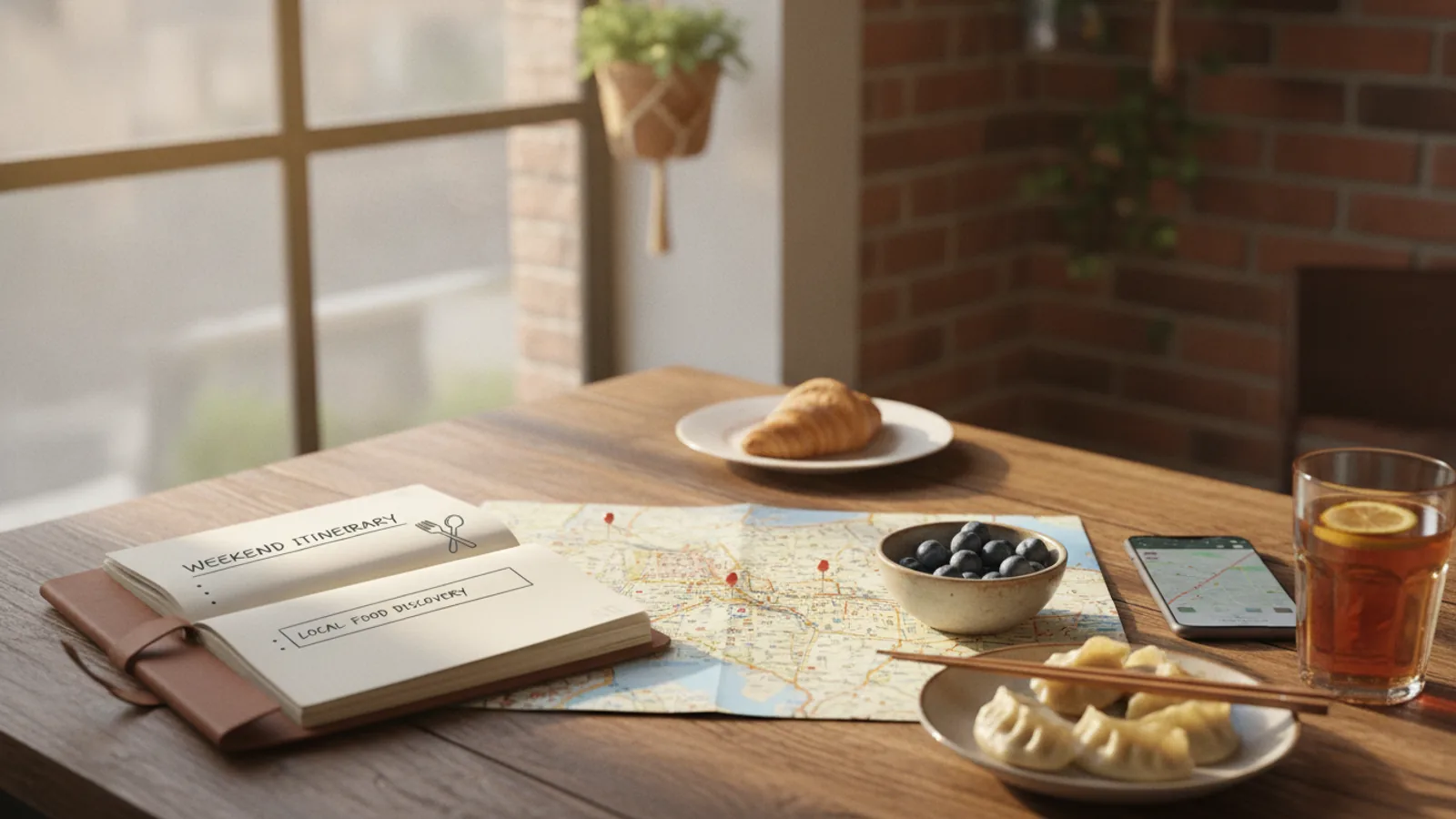
Once you have your list of attractions and food places, open a map and plot both. The goal is to group food stops with nearby sites so you minimize back-and-forth travel. For instance, if you plan to visit a museum in the morning, look for a cafe or food market within a short walking distance for lunch. Similarly, if you're sightseeing in the afternoon, find an ice cream shop or coffee place near your last stop for a mid-afternoon break. This clustering not only saves time but also gives you more opportunities to eat like a local because you're staying within a neighborhood. Use the map to see distances and walking times, and consider public transit if needed. A practical check is to draw a rough radius around each attraction and see which food spots fall inside it. If two must-try restaurants are on opposite sides of the city, plan them for different days. This approach ensures that you don't spend valuable time commuting between meals, leaving more time for exploration.
Set a Loose Daily Schedule with Open Blocks
Instead of scheduling every hour, create a flexible framework. For each day, plan two anchor activities, like a morning visit to a historic site and an afternoon tour, but leave a block of two to three hours open for wandering and meals. This open block is where you can explore a food market, grab a snack from a street vendor, or sit for a leisurely lunch at a place you discovered. The key is to have a rough idea of what you want to do, but not a rigid timeline. For example, you might say, 'In the morning, I'll visit the museum, then I'm free for lunch and exploring the neighborhood.' This leaves room for serendipity, like a bakery line that's moving slow or a festival that blocks a street. A practical check is to ensure that you have at least one meal that is not planned at all each day, allowing you to ask locals for their favorite spot. This deliberate flexibility is important because it prevents you from feeling disappointed when you can't make a reservation or when a place is unexpectedly closed.
Prioritize Lunch at Local Favorites
Lunch is often the best opportunity to eat at popular local spots because many are open only during midday and are more relaxed than dinner. Aim to have your main food exploration during lunch, whether that's a famous noodle shop, a family-run restaurant, or a food court. This also allows you to avoid the dinner rush and potentially shorter waits, giving you more time to enjoy your meal and then continue sightseeing. When planning your day, try to be near a well-regarded lunch spot around 11:30 am, so you can arrive before the crowd. Call ahead if possible to check opening hours, as some places close for a break in the afternoon. A practical check is to have a secondary lunch option in the same area in case the first is closed or has a long line. This strategy is important because it ensures you taste the authentic cuisine that locals enjoy, often at a better price and in a more authentic setting, without the pressure of evening dinner reservations.
Leave Dinner Flexible with Backups
For dinner, avoid planning a specific restaurant every night. Instead, decide on a neighborhood or street known for evening food options, such as a night market or a row of restaurants. When you're ready to eat, walk around and see what looks appealing, follow the scent, or ask a local where they recommend. This is the time to try something you've never heard of, as the informal setting encourages experimentation. However, it's smart to have a backup plan, especially on weekends when places fill up. Look up a couple of casual restaurants that are open until late and don't require reservations, so you won't be stuck. If you're traveling with a group or have specific dietary needs, consider making a reservation just for the first night to ease into the local food scene, then go with the flow for the rest. A practical check is to note the opening hours and days of any potential dinner spots, as some close on certain evenings. This approach ensures that dinner becomes an adventure rather than a logistics headache.
Incorporate Snacks and Food Stalls
Remember that in many places, the best food is found at street stalls, markets, or small shops that you might not plan on visiting. These venues often have limited seating and are meant for quick bites, so they can be a great way to sample multiple dishes in one area. Plan to have a snack activity in the late afternoon when you need a break. For example, if you're in a city known for its pastries, find a bakery and take a short break. Or if there's a famous overnight market, start your evening there with a few small portions before deciding on a more substantial dinner. These stops also offer a chance to talk to vendors and get recommendations for other hidden gems. A practical check is to have small change or small bills, as many street vendors may not accept cards. This tip is important because it allows you to eat like a local, support small vendors, and experience a variety of flavors without spending a lot of money or time on a formal meal.
Quick Reference
| Situation | Action | Why it helps |
|---|---|---|
| You're standing in front of a famous restaurant and the line is very long, but you don't want to waste time. | Check your map for a nearby alternative, such as a bakery or casual eatery, and go there for a quick snack instead. | While the long line might indicate good food, sticking to your schedule and moving on allows you to see more sights and have a more satisfying day overall. |
| You've just eaten a huge lunch and feel full, but you're supposed to try a local dessert at a specific place. | If the dessert spot is a takeaway place, order half portions or share with your travel partner, and if not, consider skipping it or saving it for the next day. | Eating beyond fullness can ruin your energy for the afternoon, so it's better to enjoy the dessert in moderation or find another time to try it. |
| You find a small food stall that looks amazing, but it's not in your original plan and you're not sure if it's sanitary. | If the stall is busy and locals are eating there, it's likely safe, so go ahead and try one small item; if you're still cautious, watch how food is handled first. | Food safety is important, but a thriving stall with a high turnover of fresh ingredients is usually a good indicator of quality and hygiene. |
Common Issues
- The restaurant you planned to visit is closed on the day you wanted to go.: Always have a backup list of at least three alternative places in the same area, and quickly call or check online to see if they're open before heading out.
- You're running out of time because a meal took longer than expected, and you might miss an attraction.: Adjust your schedule by skipping a lower-priority sight or visiting it a different day, and for the next meal, choose a quick-service place like a food truck or takeaway.
- You're in a new city and feel overwhelmed by too many food options, leading to decision paralysis.: Limit your choices by picking one or two criteria, such as 'I want something savory' or 'I want street food', and then look for the nearest place that fits that description.
Advanced Tips
- To discover hidden gems, take a short walk away from major tourist streets and look for places filled with local workers or residents, especially during lunchtime.
- If you're interested in food culture, consider taking a cooking class or a food tour on the first day, which can introduce you to local ingredients and techniques you can explore later.
- Use social media to your advantage by searching for recent posts about the specific neighborhood you're in, using keywords like 'best food [neighborhood]' or 'street food [city]', and use the geolocation feature on apps to see what's currently trending.
Final Checklist
- I have a list of must-try local dishes and have noted which neighborhoods they are in.
- I've mapped out food spots near each attraction to minimize travel time, and I have backups.
- I've left at least one meal per day unplanned for spontaneous discoveries.
- I know how to ask a local for a food recommendation, and I have small bills for street vendors.
FAQ
How far in advance should I make reservations for popular restaurants?
For high-end or very popular places, it's wise to book a few weeks ahead, especially on weekends. However, for most everyday spots, you can just show up, but having a backup is always a good idea.
Is it okay to eat at street food stalls often?
Yes, street food can be a great way to experience local flavors. Look for stalls with high turnover and locals eating, and if you have a sensitive stomach, stick to cooked-to-order items.
What if I have dietary restrictions?
Learn key phrases in the local language to explain your restrictions, and research restaurants that accommodate them. Always have a backup place in mind, and consider self-prepared snacks if needed.