How To Create A Self Guided Food Tour Of A Historic District
A practical step-by-step guide to How to create a self-guided food tour of a historic district, including preparation, instructions, common issues, tips, and next steps.
How To Create A Self Guided Food Tour Of A Historic District
A self-guided food tour lets you explore a historic district at your own pace, tasting local specialties while learning the stories behind the streets. This guide shows you how to plan a safe, enjoyable route that balances walking, eating, and discovery without joining a group or paying a guide.
Fast Answer
- Choose four to six tasting stops within a compact walking area, then order them so you walk a loop instead of backtracking.
- Call each stop ahead or check its posted hours and current menu, because small food shops in historic districts often close early or change days seasonally.
Before You Start
- List four to six food stops you want to try, and note the opening days and hours for each from the business's own posted information.
- Check the weather forecast and pick a day with mild conditions, since a food tour involves standing, walking, and possibly eating outdoors.
- Prepare a small bag with water, a cloth or napkin, any personal medication you need, and a light layer in case the temperature changes.
- Set a comfortable budget for yourself before you go and decide in advance how many stops you can realistically enjoy without feeling rushed or overly full.
Step-by-Step Instructions
Map a compact walking route first
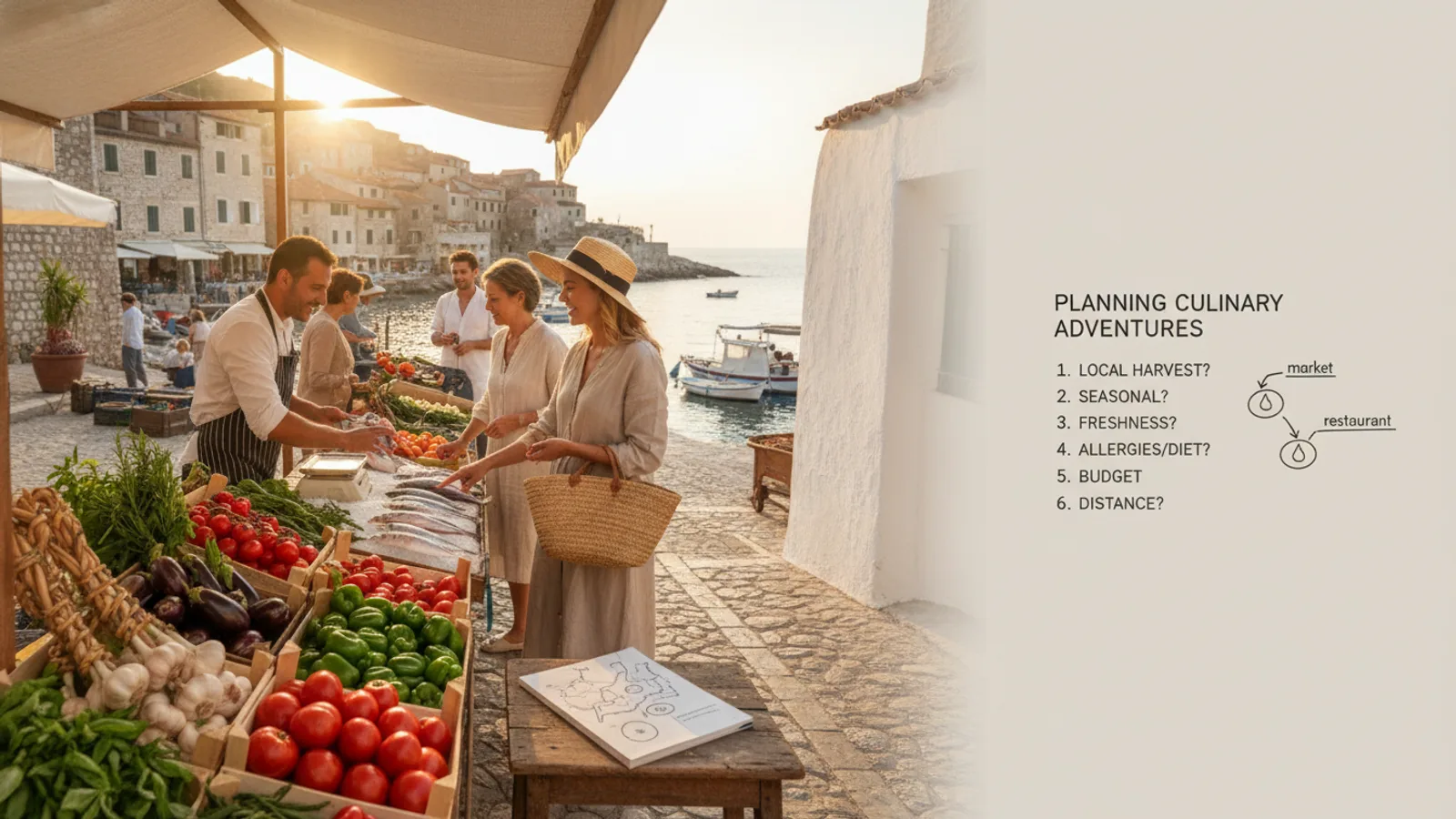
Start by drawing a rough map of the historic district on paper or in a notes file. Mark every candidate food stop, then look for a path that connects them in a loop rather than a straight line that forces you to walk back. A loop keeps your energy steady and lets you end near where you began. Check the total distance and estimate your walking time at a relaxed pace. Next, confirm that the loop stays within streets you are comfortable navigating, since older districts often have confusing intersections. As a practical check, walk the route mentally and count how many turns are unclear; if more than two feel uncertain, simplify the path. This check matters because a confusing route drains the fun and can leave you tired before the best stops.
Time your stops around opening hours
Once the route is set, list the opening and closing times for each stop using the business's own posted schedule. Small food shops in historic areas often open late, close early, or take a weekly rest day. Build your timetable so the first stop opens before you arrive and the last stop stays open while you finish. Add a small buffer between stops for lines, waiting, and walking. Then check whether any stop has a lunch-only or morning-only specialty you want to try; if so, place it in the correct time window. As a practical check, call or check the posted information again on the morning of your tour and adjust the order if a shop reports a change. This check matters because a single closed stop can break the rhythm of the whole day.
Plan portions to avoid getting full
A common mistake on a self-guided food tour is ordering a full serving at every stop and feeling too full to continue. Decide before you start to order small or share items where possible, and drink water between stops. At each place, choose one signature item rather than a full meal, and ask whether a smaller portion is available. Keep a simple count in your head of how many stops remain, and let that guide how much you eat. As a practical check, note how you feel after every second stop; if you are uncomfortably full, skip a planned item or convert the next stop into a drink or a short rest. This check matters because pacing your appetite keeps the tour enjoyable from the first bite to the last.
Learn one story per stop
Food tastes better when you know its context. Before you go, spend a short time reading about the district's history and the dishes that grew from it. For each stop, note one or two facts you can share with your group, such as how a recipe arrived in the area or why a particular ingredient is common there. When you arrive, look for posted signs, menu notes, or staff who seem free to talk, and ask a simple question. Then connect that stop to the next one in your route so the day feels like a story rather than a list. As a practical check, after each stop, say out loud one sentence about what you learned; if you cannot, you may be moving too fast. This check matters because the stories are what turn a snack walk into a memorable tour.
Build in rest and bathroom breaks
Walking, standing, and eating for several hours is more tiring than it sounds. Place a rest stop about halfway through your route, ideally at a public space, a park edge, or a quiet cafe where you can sit. Before the tour, identify at least two public restroom options along the way and mark them on your map. During the tour, use the rest break to check your route, drink water, and decide whether to keep the remaining stops or shorten the plan. As a practical check, confirm that your halfway point is truly near the middle of the walking route, not just the middle of the list. This check matters because a poorly placed rest stop leaves a long, uncomfortable stretch with no place to recover, especially for older walkers or children.
Adjust the plan as the day unfolds
Even a well-planned tour needs flexibility. On the day, start with your route but stay ready to change it. If a line is too long, note the stop for next time and move on. If you discover a small market or a stall that looks interesting, allow a short detour, then return to your loop. Keep track of the time and how your group feels, and decide together whether to continue or finish early. As a practical check, review your remaining stops and your energy level at the rest break; if either is low, cut one stop rather than rushing through the rest. This check matters because a relaxed, shorter tour is far better than a stressful one that you do not enjoy. End near a transit stop or a place to sit if you can.
Quick Reference
| Situation | Action | Why it helps |
|---|---|---|
| A planned food stop is unexpectedly closed on the day of your tour. | Check your backup stop nearest that point on the route, confirm its posted hours by phone or its own posting, and walk there instead before continuing to the next planned stop. | Having a nearby backup keeps your route intact and prevents a long, hungry walk to a distant alternative that may also be closed. |
| You feel too full to enjoy the next tasting stop on your list. | Order a small item, a drink, or nothing at that stop, take a ten-minute seated rest, and then decide whether to continue or end the tour early. | Eating past your comfort level ruins the pleasure of later stops, and a short rest often restores your appetite and energy. |
| You are unsure whether a dish is safe for a food allergy or dietary need. | Tell the staff clearly what you must avoid, ask what ingredients and preparation methods are used, and skip the item if they cannot confirm it is safe for you. | Only you and the vendor know the ingredients, and choosing to skip an uncertain item protects your health without ending the tour. |
Common Issues
- The route makes you walk the same street twice or backtrack to reach stops.: Redraw the route as a loop using a simple map, place the stops in walking order, and check the path for repeated segments before you leave. If a stop sits far outside the loop, save it for another day rather than adding a long detour.
- Several stops are closed because you did not confirm their current hours.: Check each business's own posted schedule the day before and again on the morning of the tour. Small food shops often change days or hours with seasons and local events, so treat any older list as a starting point and confirm it yourself before walking.
- You run out of energy or time before reaching the final stops.: Cut one stop at your halfway rest break instead of rushing, and end the tour near a transit stop or a place to sit. A shorter, relaxed tour is more enjoyable than a rushed one, and you can return another day for the stops you missed.
Advanced Tips
- Taste in a deliberate order: begin with lighter, savory items and move toward richer or sweeter ones, because strong flavors early can dull your palate for everything that follows.
- Visit on a weekday morning when foot traffic is lower, since smaller shops are calmer and staff often have more time to answer questions about the food.
- Bring a small notebook and record the name of each dish, the street, and one detail you learned, so you can rebuild the tour for friends or repeat it on a future visit.
Final Checklist
- Your route forms a loop with four to six stops and at least one backup stop marked near the middle.
- You have confirmed current opening hours for every stop from each business's own posted information.
- Your bag holds water, a napkin or cloth, any personal medication, and a light layer for changing weather.
- You have identified a halfway rest point and at least two public restroom options along the route.
FAQ
How many food stops should a self-guided tour include?
Most people enjoy four to six stops over a few hours. Fewer stops let you spend more time at each place, while more stops often mean smaller tastes and more walking. Choose a number that matches your appetite, your group's energy, and the size of the district, and be ready to cut one stop if the day runs long.
Do I need to book or reserve stops in advance?
It depends on the business. Some small shops take walk-in customers only, while others may accept reservations or have limited seating. Check each stop's own posted information or contact them directly before your tour, and ask whether a group of your size can be seated or served without a long wait.
What should I do if someone in my group has a food allergy?
Tell every vendor about the allergy before ordering, ask what ingredients and preparation methods are used, and skip any item that cannot be confirmed as safe. Carry any needed medication, and let the group know which stops may be difficult so you can plan alternatives together before the tour begins.